Workplace coexistence committee in Colombia 2026: Resolution 3461 of 2025 and Decree 1040, composition, functions and deadlines

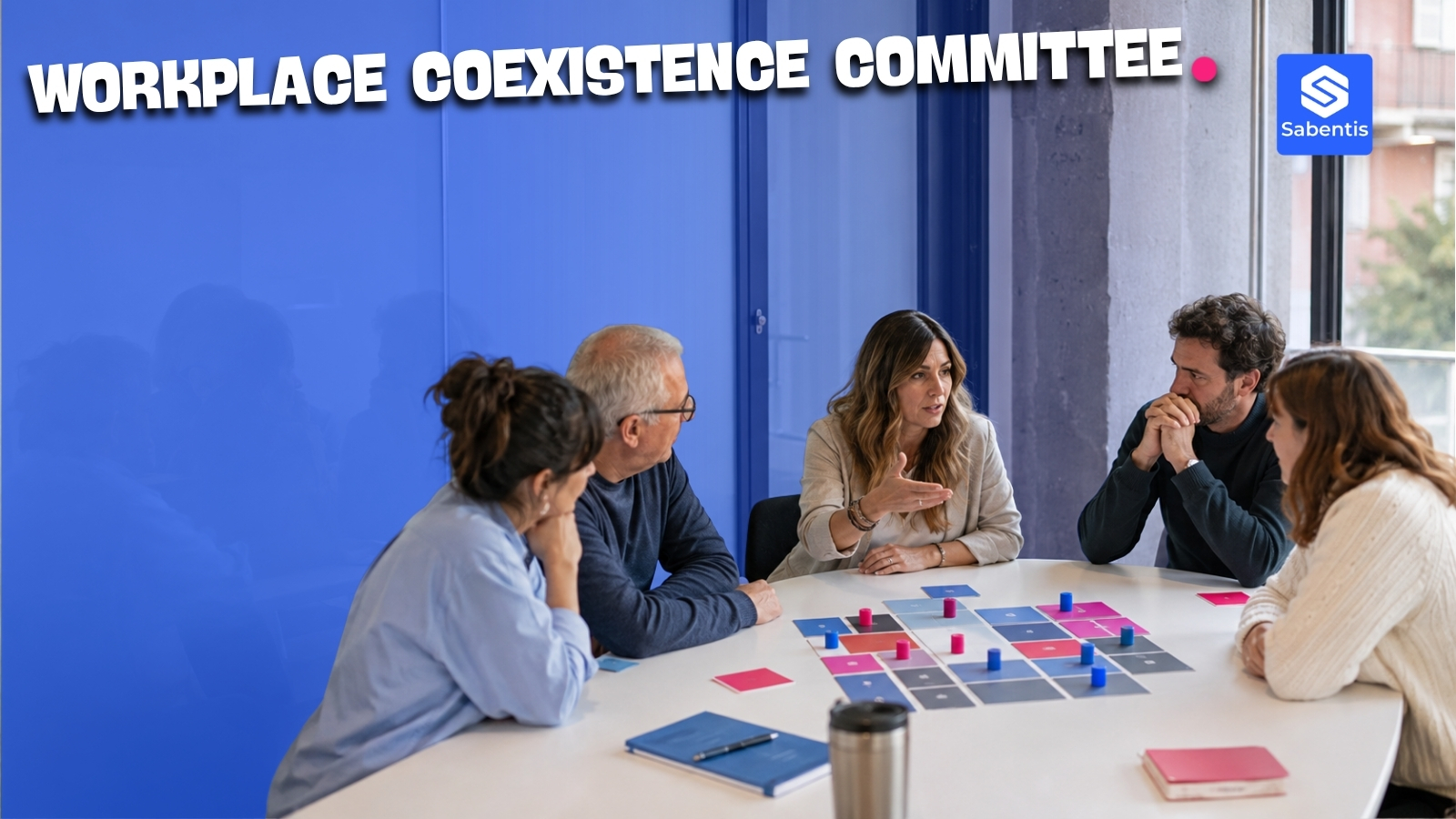
The workplace coexistence committee (comité de convivencia laboral) is the internal body that receives, processes and conciliates workplace harassment complaints in Colombian companies. Resolution 3461 of 2025, issued on 1 September 2025, repealed Resolutions 652 and 1356 of 2012 and updated its composition, functions and deadlines; Decree 1040 of 2026 integrated it into the policy and protocol for preventing workplace harassment, violence and discrimination. As of 22 August 2026, Resolution 3461 of 2025 remained in force: on 30 July 2026 the Ministry of Labour published a draft intended to replace it in full, comments closed on 18 August, but the draft is not yet binding. This guide summarises what the company must do in 2026.
What the workplace coexistence committee is
It is a bipartite body, with employer and worker representation, created under Law 1010 of 2006 to prevent workplace harassment and handle complaints through a confidential, conciliatory procedure with deadlines. It does not sanction: it recommends, conciliates and, failing agreement, in the public sector refers the complaint to the Office of the Inspector General or the competent municipal ombudsman and, in the private sector, informs senior management and closes the internal case, leaving open the route to the labour inspector or the competent court.
Composition under Resolution 3461 of 2025
- Companies with fewer than five workers: one representative for each side.
- Companies with more than five and fewer than twenty workers: one representative for each side, with alternates.
- Companies with more than twenty workers: two representatives for each side, with alternates. The resolution does not expressly regulate the cases of exactly five or twenty workers.
- Worker representatives are elected by secret ballot; employer representatives are appointed by management.
- A 2-year term. Where there are two or more workplaces, a central committee and an additional committee for each workplace must be established in accordance with the organisation’s internal structure.
- The committee may not include persons against whom a workplace-harassment complaint has been filed or persons who were victims of workplace harassment during the year preceding its formation.
The resolution keeps confidentiality, mandatory training for members and the obligation to record minutes of every meeting.
Functions and the 65-calendar-day deadline
The main functions are receiving and processing complaints, hearing the parties, holding conciliation meetings, drawing up improvement plans and following them up, submitting recommendations to senior management and preparing quarterly and annual reports. The preventive procedure may not exceed 65 calendar days from receipt of the formal complaint; stage deadlines are not cumulative and do not permit that maximum to be exceeded, and monthly monitoring of commitments falls outside the calculation. The committee meets in ordinary session each month for administrative, reporting and follow-up functions, and in extraordinary session whenever it receives a formal complaint.
What Decree 1040 of 2026 adds
Decree 1040 of 2026 requires employers to have a policy and a protocol for preventing workplace harassment, violence and discrimination, a rapid and confidential assessment of protective measures with immediate measures (the five-working-day period has a limited scope for certain measures in sexual harassment or sexual violence cases, at the victim’s request) and the integration of all of this into the SG-SST (new Chapter 8 of Title 1, Part 2, Book 2 of Decree 1072 of 2015). The coexistence committee applies the preventive and conciliatory workplace-harassment procedure and its minutes and recommendations serve as evidence, but it neither hears nor conciliates sexual-harassment cases. ARLs must report each month to the Ministry of Labour the prevention and support activities they have carried out, not individual case information. Details in our guide to Decree 1040 of 2026.
Coordination with the SG-SST and psychosocial risk
The committee does not replace psychosocial risk management: each case must be connected to the psychosocial risk factor assessment (Resolution 2764 of 2022), the intervention plan and the SG-SST indicators. Any information exchange between the coexistence committee, the COPASST and the SG-SST officer must be limited to what is necessary, use aggregated or anonymised data and respect confidentiality and the protection of sensitive personal data.
Penalties
Failing to set up the committee, train it or handle complaints on time can lead to sanctions under Decree 1295 of 1994, Law 1562 of 2012 and Decree 1072 of 2015, as well as inspection findings and the liability provided in Law 1010 of 2006.
2026 checklist
- Verify the current composition according to the number of workers and renew if the term has expired.
- Elect worker representatives by secret ballot and document it.
- Train members in workplace harassment, conciliation and confidentiality.
- Approve the committee’s internal rules and meeting calendar.
- Align the procedure with the Decree 1040 of 2026 protocol, the monthly meetings and the 65-calendar-day maximum.
- Keep minutes, complaints and recommendations with access control.
How Sabentis helps
Sabentis’s committee management within the organisational management and planning modules handles members, terms, notices, minutes and tasks of the coexistence committee and the COPASST, with role-based confidentiality, and links them to psychosocial studies and SG-SST indicators.
Frequently asked questions
Is the workplace coexistence committee mandatory in all companies?
Yes, in public and private companies with workers, with a composition proportional to size.
What is the difference between the coexistence committee and the COPASST?
The COPASST oversees the SG-SST in general; the coexistence committee deals specifically with workplace harassment.
What happens if the complaint is not resolved in the committee?
In the public sector the complaint is referred to the Office of the Inspector General or the competent municipal ombudsman; in the private sector, senior management is informed, the internal case is closed and the worker may approach the labour inspector or the competent court.